Canadian scientists apply new methods to better understand Pacific coast earthquakes
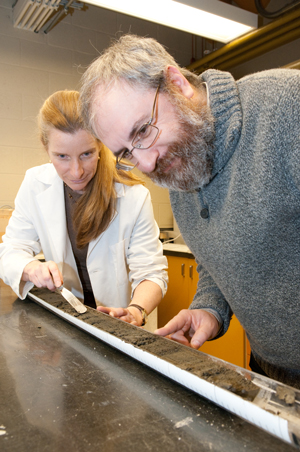 Understanding the size and frequency of large earthquakes along the Pacific coast of North America is of great importance, not just to scientists, but also to government planners and the general public. The only way to predict the frequency and intensity of the ground motion expected from large and giant "megathrust " earthquakes along Canada's west coast is to analyze the geologic record. A new study published today in the Canadian Journal of Earth Sciences presents an exceptionally well-dated first record of earthquake history along the south coast of BC. Using a new high-resolution age model, a team of scientists meticulously identified and dated the disturbed sedimentary layers in a 40-metre marine sediment core raised from Effingham Inlet. The disturbances appear to have been caused by large and megathrust earthquakes that have occurred over the past 11,000 years.
Read More
 www.safecomprogram.gov/NR/rdonlyres/132003E7-6C43-4E15-97D6-A2A4E5A2704F/0/GrantProgramsforSAFECOMWebsite.pdf