Get Re-Certified for CERT!

Table of Contents

CERT.512x324A few good (but currently inactive) CERTies needed for January 20 and 27 Refresher

The Refresher is an 8-hour review of medical and SAR (Search and Rescue), plus lots of updates for people who took the basic course awhile ago and would like to join the active team.  The course is held in two 4-hour sessions on Friday evenings.

If you’re currently active with CERT and would like to help with medical or an indoor search, please contact Jan Milligan. 

Contact Sharon or Jan to reserve a space.
comments powered by Disqus

Related Posts

Prepare for wildfire

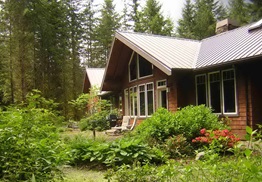
House with fire resistant landscapingEven in temperate western Washington it can take only a few sunny days for forests to dry out enough to catch fire. And, in windy conditions wildfires can get out of control quickly. Wildfires burn every year in east King County. Before wildfire strikes, homeowners can help protect lives and property by creating a fire-adapted space around structures.
Top 8 tips for maintaining a wildfire safety zone in the 30 feet around your home

  1. Remove all dead plant material from around your home. Rake up dry leaves (under decks and porches too!) and move firewood away from the house. Keep your roof and gutters clear of flammable debris.

  2. Place a 3 to 5-foot swath of gravel or stones around the foundation of your home instead of flammable mulch.

  3. Prune branches that overhang or touch the house.

  4. Take out "ladder fuels," vegetation between grass and treetops that can carry fire between foliage and structures. 

  5. Keep blowing embers out of your house. Cover exterior vents with fine (1/8-inch) mesh.

  6. Store flammable materials, including cushions, indoors instead of on porches and decks.

  7. Use fire-resistant construction materials such as Class-A asphalt shingles, metal or concrete products for your roof.

  8. Use fire-resistant plants in the garden. Read our list of fire-resistant plants for the Puget Sound Basin (PDF), or search our illustrated online Native Plant Guide for fire-resistant plants.


- Copied from

https://kingcounty.gov/services/environment/water-and-land/forestry/forestfire.aspx 

– which has MORE details and information.

Read More

NASA-- Sudden massive melt Greenland

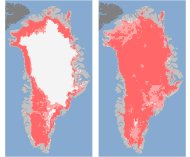
These undated handout images provided by NASA shows the extent of surface melt over Greenland’s ice sheet on July 8, left, and July 12, right. Measurements from three satellites showed that on July 8, about 40 percent of the ice sheet had undergone thawing at or near the surface. In just a few days, the melting had dramatically accelerated and an estimated 97 percent of the ice sheet surface had thawed by July 12. In the image, the areas classified as “probable melt” (light pink) correspond to those sites where at least one satellite detected surface melting. The areas classified as “melt” (dark pink) correspond to sites where two or three satellites detected surface melting. Nearly every part of the massive Greenland ice sheet suddenly and strangely melted a bit this month in a freak event that concerned scientists had never witnessed before. NASA says three different satellites saw what it calls unprecedented melting from July 8 to July 12. Most of the thick ice remains, but what was unusual was the widespread area where some melting occurred. (AP Photo/Nicolo E. DiGirolamo, SSAI/NASA GSFC, and Jesse Allen, NASA Earth ObservatoryAccording to an interesting AP report, “Nearly all of Greenland's massive ice sheet suddenly started melting a bit this month, a freak event that surprised scientists.

Read More

Disasters generate 15 years worth of solid waste in just days

Disasters can typically generate up to fifteen years worth of a community's solid waste over a few days, with the potential to overwhelm day-to-day solid waste operations and to lead to years of disruption; FEMA estimates that debris removal accounted for 27 percent of their total disaster response costs for those U.S. disasters between 2002 and 2007; prolonged problems with the management of solid waste can lead to public and environmental health issues;  slow management of solid waste can also impede economic recovery by inhibiting rebuilding activities.

Read More